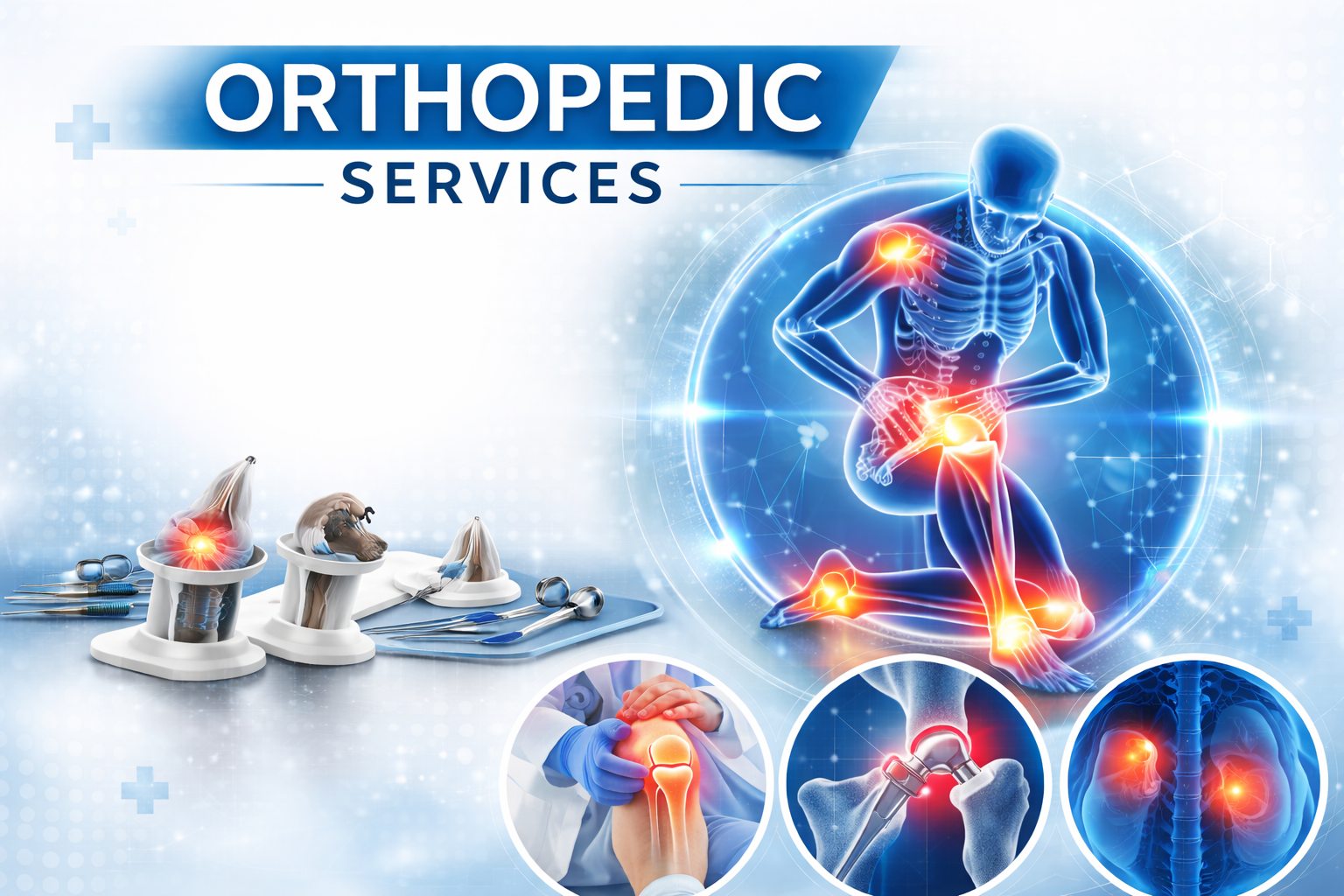
1. Joint Replacement Surgery
Joint replacement surgery is recommended for patients suffering from advanced knee or hip arthritis that limits daily activities. The procedure involves replacing the damaged joint surfaces with high-quality implants to restore smooth movement and reduce chronic pain. With careful pre-operative planning, minimally invasive techniques, and structured rehabilitation, patients experience improved mobility, stability, and long-term joint function, allowing them to return to an active and independent lifestyle.
2. Fracture & Trauma Care
Fracture and trauma care focuses on proper alignment and stabilization of broken bones to ensure complete healing. Treatment may include casting, splinting, or surgical fixation using plates, screws, or rods depending on the severity. Early diagnosis and expert intervention prevent complications such as improper healing or stiffness. Post-treatment rehabilitation and physiotherapy play a vital role in restoring strength, flexibility, and full function of the affected limb.
3. Arthritis Treatment
Arthritis treatment aims to relieve joint pain, reduce inflammation, and improve mobility. Management includes medication, lifestyle modification, physiotherapy, joint injections, and advanced therapies depending on the condition’s severity. Early intervention helps slow joint damage and maintain flexibility. For severe cases where conservative treatment fails, surgical options like joint replacement may be advised to restore comfort and quality of life.
4. Sports Injury Treatment
Sports injuries such as ligament tears, ACL injuries, meniscus damage, and shoulder dislocations require specialized orthopedic care. A thorough clinical evaluation and imaging help determine the severity of injury. Treatment may involve physiotherapy, bracing, minimally invasive arthroscopic surgery, and structured rehabilitation programs. The focus is on pain relief, tissue healing, muscle strengthening, and ensuring a safe return to sports activities without risk of re-injury.
5. Spine Disorders Treatment
Spine disorders including slip disc, sciatica, cervical spondylosis, and chronic back pain can significantly affect daily functioning. Treatment begins with conservative methods such as medication, physiotherapy, posture correction, and lifestyle changes. If symptoms persist, minimally invasive spine procedures may be considered. Early diagnosis and targeted therapy help reduce nerve compression, relieve pain, and restore mobility while preventing long-term spinal complications.
6. Pediatric Orthopedics
Pediatric orthopedic care focuses on diagnosing and treating bone, joint, and developmental disorders in children. Conditions such as congenital deformities, growth-related problems, fractures, and limb alignment issues require specialized evaluation. Early detection is crucial for proper growth and development. Treatment plans are child-friendly and may include bracing, casting, corrective procedures, and continuous monitoring to ensure healthy musculoskeletal development.